
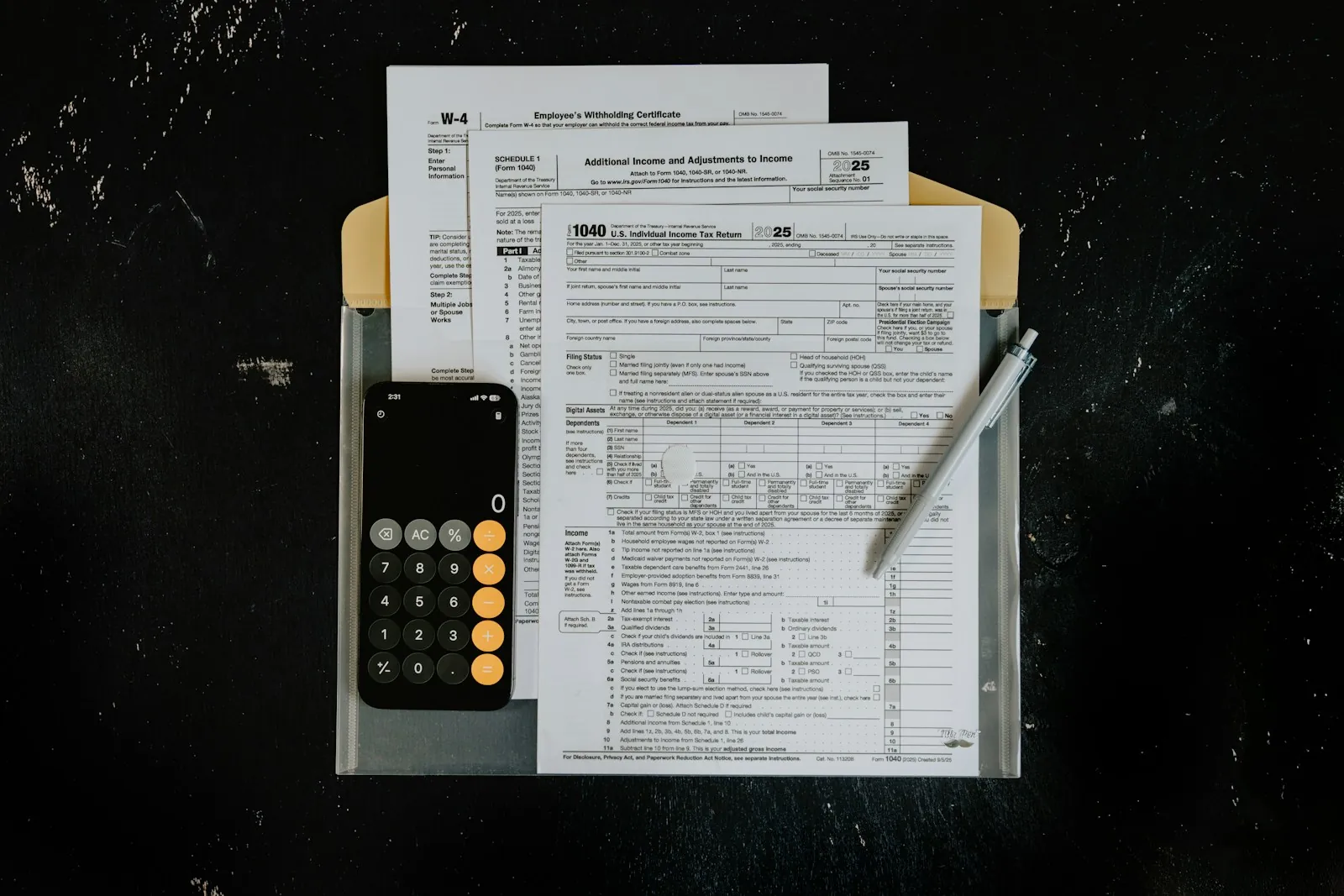
For tax professionals, the year has a rhythm: a quieter fall, a busy January, and a sprint to the April filing deadline. Many preparers work from home most of the year, then find that a dining room can’t handle a steady stream of clients, documents, and confidential conversations once the season starts. If you prepare returns in Round Rock, Georgetown, or elsewhere in Williamson County, here is how to think about office space for the 2027 tax season.
Why a dedicated office matters during tax season
Tax work involves some of the most sensitive information clients ever share: Social Security numbers, income records, bank details, and family information. A professional office helps you protect that information and present your practice well.
- Privacy for client interviews. Clients speak more openly in a room with a closed door than at a coffee shop or kitchen table.
- A professional first impression. A real business address and a reception area tell new clients they’re working with an established practice.
- Separation from home. Keeping client files and meetings out of your house protects your family’s privacy and your own.
- Room for help. If you add a seasonal assistant or a second preparer, you need a place for them to work.
Your data security obligations include the physical office
Federal rules treat tax and accounting professionals as financial institutions. IRS Publication 5708 explains that under the Gramm-Leach-Bliley Act and the FTC Safeguards Rule, tax professionals are considered financial institutions regardless of size, and it provides a template for the written information security plan (WISP) that the rule requires. The IRS has also emphasized that a written information security plan protects tax pros and their clients.
Most of that plan covers technology, such as passwords, encryption, and multi-factor authentication. But IRS Publication 4557, Safeguarding Taxpayer Data, also addresses physical safeguards. When you evaluate an office, ask yourself:
- Can I lock the office and keep paper files out of sight?
- Who else has access to the space, and when?
- Is there a private room for client interviews where conversations can’t be overheard?
- Is the internet connection reliable and secure enough for e-filing and client portals?
Your plan should describe how your workspace meets these needs. If you are updating your WISP for the new season, now is a good time to include your office setup.
Plan around the calendar
For most individual taxpayers, federal returns are due April 15, as the IRS notes on its when-to-file page. Texas doesn’t have a state personal income tax, as the Texas Comptroller’s tax pages reflect, so local preparers focus on federal returns. That makes the season concentrated, and it rewards preparation:
- November and December: tour offices, choose your setup, and move in before clients start calling.
- January: confirm phone answering and mail handling are in place, and update your website and listings with your office address.
- February through April: reserve meeting rooms for longer client sessions and team reviews during the busiest weeks.
- After the deadline: decide whether to keep a private office year-round or switch to a virtual office until next season.
Choose a setup that fits your practice
- A private office is the best fit for most preparers who meet clients in person. It gives you a lockable door, a professional setting, and a place to keep files secure.
- A virtual office provides a professional business address, phone answering, and mail handling. It is a good choice if you work mostly remotely but want a local presence, or as a way to keep your address between seasons.
- Meeting rooms can be booked by the hour when you need a larger space for a client family or a team session.
- Coworking or a day pass gives seasonal staff a place to work without a long-term commitment.
Office space at Heritage Office Suites
Heritage Office Suites has two locations: Round Rock, at 1000 Heritage Center Circle, and Georgetown, at 601 Quail Valley Drive. We offer fully furnished private offices, virtual office plans with phone answering and mail handling, and meeting rooms by the hour. Members have 24/7 access, free parking, ultra-fast internet, and an on-site café with complimentary beverages, and our front-desk staff welcomes your clients. Accountants and tax professionals are already part of our community. Read more on our page for accountants, or meet one of our members in Faces of Georgetown with Debra Bawcom and her team from Texas ProTax.
Frequently asked questions
When should tax preparers secure office space for the season?
November or December is ideal. Moving in before January gives you time to set up technology and update your address before clients start scheduling appointments.
Do tax preparers need a written information security plan?
IRS Publication 5708 explains that tax professionals are covered by the FTC Safeguards Rule, which requires a written information security plan. The publication includes a template to help you create one.
Can I keep a business address after tax season ends?
Yes. Many preparers switch to a virtual office between seasons to keep their business address, phone answering, and mail handling without paying for a full-time office.
Get ready for the season
January will be here quickly. Contact Heritage Office Suites to schedule a tour of our Round Rock or Georgetown location and find the right setup for your practice.
This article is general information, not legal or tax compliance advice. Review IRS guidance and consult a qualified professional about your specific obligations.


